DonateSupporterVisit Heritage
  • Tūrangawaewae
    Places
  • Tira Māori
    Māori Heritage
  • Poutairangahia
    Archaeology
  • Rauemi
    Resources
  • Mō Tātou
    About Us
  • New Zealand Heritage List
  • Nominate and submit
  • Explore the List
  • National Historic Landmarks
  • Plaques
  • Rainbow List Project
  • Lost heritage
  • Visit Heritage
  • Our properties
  • Turnbull House Project
  • Collections
  • Shop
  • Tohu Whenua
  • Tira Māori
  • Conserving Māori heritage
  • Marae built heritage
  • Māori heritage on the List
  • Hinemihi—Te Hokinga Mai
  • What is archaeology?
  • Is there a site on my property?
  • What are my legal requirements?
  • Affecting an archaeological site
  • Declaring an archaeological site
  • Archaeology FAQs
  • Archaeology Digital Library
  • Archaeology guidelines and templates
  • Resources
  • Funding
  • Publications
  • Sustainable management guides
  • Disaster recovery
  • Podcasts & digital resources
  • Education Hub
  • Conservation plans
  • About
  • Board
  • Māori Heritage Council
  • Senior Staff
  • Offices
  • Contact us
  • Careers
  • Covenants
  • Fast-track
  • Corporate documents
  • Currently consulting on
  • Our submissions
  • News
Quick links
Rārangi Kōrero | The List
Explore the List
National Historic Landmarks
Ngā Manawhenua o Aotearoa me ōna Kōrero Tūturu
Quick links
Tapuwae
A Vision for Places of Māori Heritage
Funding for Māori Heritage
Resources
Quick links
Archaeological Authority Portal
Applying for an archaeological authority
Archaeology FAQs
Browse the most frequently asked questions about archaeological authorities and the archaeological process.
Quick links
Quick links
Contact us
Offices
DonateSupporterVisit Heritage
  • Tūrangawaewae
    Places
  • Tira Māori
    Māori Heritage
  • Poutairangahia
    Archaeology
  • Rauemi
    Resources
  • Mō Tātou
    About Us
  • New Zealand Heritage List
  • Nominate and submit
  • Explore the List
  • National Historic Landmarks
  • Plaques
  • Rainbow List Project
  • Lost heritage
  • Visit Heritage
  • Our properties
  • Turnbull House Project
  • Collections
  • Shop
  • Tohu Whenua
  • Tira Māori
  • Conserving Māori heritage
  • Marae built heritage
  • Māori heritage on the List
  • Hinemihi—Te Hokinga Mai
  • What is archaeology?
  • Is there a site on my property?
  • What are my legal requirements?
  • Affecting an archaeological site
  • Declaring an archaeological site
  • Archaeology FAQs
  • Archaeology Digital Library
  • Archaeology guidelines and templates
  • Resources
  • Funding
  • Publications
  • Sustainable management guides
  • Disaster recovery
  • Podcasts & digital resources
  • Education Hub
  • Conservation plans
  • About
  • Board
  • Māori Heritage Council
  • Senior Staff
  • Offices
  • Contact us
  • Careers
  • Covenants
  • Fast-track
  • Corporate documents
  • Currently consulting on
  • Our submissions
  • News
Quick links
Rārangi Kōrero | The List
Explore the List
National Historic Landmarks
Ngā Manawhenua o Aotearoa me ōna Kōrero Tūturu
Quick links
Tapuwae
A Vision for Places of Māori Heritage
Funding for Māori Heritage
Resources
Quick links
Archaeological Authority Portal
Applying for an archaeological authority
Archaeology FAQs
Browse the most frequently asked questions about archaeological authorities and the archaeological process.
Quick links
Quick links
Contact us
Offices
  • Places
  • Nominate and submit
  • National Historic Landmarks
  • Places
  • Nominate and submit
  • National Historic Landmarks
  • Tira Māori
  • Conserving Māori heritage
  • Marae built heritage
  • Tira Māori
  • Conserving Māori heritage
  • Marae built heritage
  • Archaeological authorities
  • Archaeology Digital Library
  • Archaeological authorities
  • Archaeology Digital Library
  • All resources
  • Publications
  • Funding
  • All resources
  • Publications
  • Funding
  • FAQs
  • FAQs
Follow us on:
Places
  • Places
  • Nominate and submit
  • National Historic Landmarks
Tira Māori
  • Tira Māori
  • Conserving Māori heritage
  • Marae built heritage
Archaeology
  • Archaeological authorities
  • Archaeology Digital Library
Resources
  • All resources
  • Publications
  • Funding
FAQs
  • FAQs
Follow us on
HomePrivacyTerms and conditionsAbout this site
© Heritage New Zealand Pouhere Taonga 2026.
 
Tarureka Cowshed

38 Donald Street and Revans Street (State Highway 53), FEATHERSTON

Private

Historic Place Category 1

List No. 1300

Quick links:
List GalleryLocationDetails
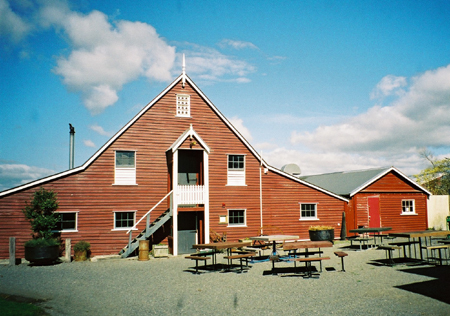
The Tarureka Cowshed in Featherston is a significant, physical reminder of the early years of the New Zealand dairy industry. James Donald, a Scottish carpenter, built the cowshed at the suggestion of his wife, Elizabeth, in 1868. It is a simple, two-storey building with a steeply pitched roof. The second floor was used as a loft. Two single storey lean-tos provide extra space on each side. It was constructed according to a multifunctional design commonly used in European barns. Erected before herringbone milking sheds were developed, its 38 cow-bails are based on the rectangular restraining posts used to milk cows in open yards. In the lean-to on the east, Clydesdales were fed from the hay shovelled down from the storage loft above. Horses were broken in a small room to the west. A small, decorated porch was built at the front of the building and used by the men to collect the hay and chaff that was once stored in the loft. The porch is a special feature of the building and shows a refinement unusual in utilitarian farm buildings.

As in most newly established farming settlements, outside labour was both scarce and expensive in Featherston in the 1860s. Elizabeth and her daughters undertook full responsibility for all aspects of dairying, from the purchase of cows to the time-consuming task of hand-milking the herd and making butter. Males were responsible for the horses and the hauling of hay into the loft. By 1881 farming success enabled James Donald to establish four more dairy farms. He was unable to persuade local settlers to form a co-operative dairy company and in 1881 Donald opened the private Tarureka Butter Factory to process the milk from his farms. Located a short distance from the cowshed, the factory began on a modest scale. By 1901 it was firmly established and processing milk from over 600 cows. The success of the factory was partially due to the innovative supervision of Bessie Donald who became manager of the factory in 1899. Bessie was responsible for introducing the first De Laval separator into New Zealand and successfully exported Tarureka butter until 1916, when war made its production uneconomical. The factory was eventually demolished. Milk from the Donald homestead was collected and turned into cheese at another Featherston dairy company.

The multiple functions that the cowshed was designed to accommodate made the building a versatile space, ensuring its survival long after other buildings associated with the dairy industry vanished from the Donald estate. Today the cowshed serves as excellent example of successful 'adaptive re-use'. In 1997 the owners, descendants of James and Elizabeth Donald, enclosed the east wall and converted the cowshed into a café and wine-bar. The lean-to on the right, originally built as a space in which yearlings could be kept, and later used as a garage, was converted into a kitchen and bar service area. The loft has been restored to its original state, the only addition being an internal staircase. It now serves as a function centre specialising in wedding receptions. Despite the dramatic change to the building's function, the original architecture has been carefully preserved, allowing its historical associations to provide valuable insight into early New Zealand dairying.

Tarureka Cowshed is both historically and architecturally significant. It is inextricably linked with the Tarureka butter factory, a contributor of national importance to the early years of the New Zealand dairy industry. Linked with the history of women in the farming community, the building provides insight into both the working conditions of these women and the running of the wider dairy organisation. It is noteworthy for its incorporation of early technological developments in the dairy industry, including the use of covered cow-bails and feeding troughs. As the last remaining utilitarian building connected with the early butter factory, the cowshed also has local significance. Although it was not the first dairy factory in Featherston, the cowshed is the last remaining structure associated with this early industry in the area and, as such, serves as a reminder of this important part of the town's history.
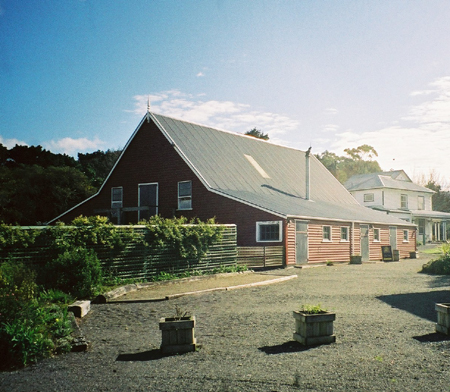
Tarureka Woolshed, Featherston | Rebecca O'Brien | 31/08/2002 | Heritage New Zealand Pouhere Taonga
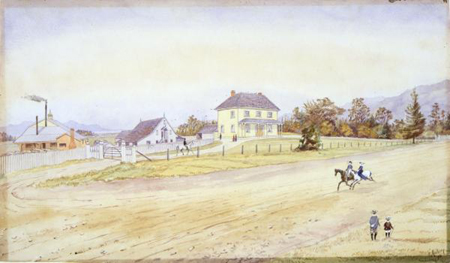
Tarureka Woolshed, Featherston. Drawing. Permission of the Alexander Turnbull Library, Wellington, New Zealand, must be obtained before any re-use of this image | Christopher Aubrey | Alexander Turnbull Library
Tarureka Woolshed, Featherston | Rebecca O'Brien | 31/08/2002 | Heritage New Zealand Pouhere Taonga
Tarureka Woolshed, Featherston. Drawing. Permission of the Alexander Turnbull Library, Wellington, New Zealand, must be obtained before any re-use of this image | Christopher Aubrey | Alexander Turnbull Library

List Entry Information

Overview

Status
Listed

List Entry Status
Historic Place Category 1

Access
Private/No Public Access

List Number
1300

Date Entered
2nd July 1987

Date of Effect
2nd July 1987

City/District Council
South Wairarapa District

Region
Wellington Region

Extent of List Entry

Extent includes part of the land described as Lot 1 DP 359158 (RT 241070), Wellington Land District, and the building known as Tarureka Cowshed thereon.

Legal description

Lot 1 DP 359158 (RT 241070), Wellington Land District

Location Description

38 Donald Street, Featherston

Detailed List Entry

Construction Details

Start Year

1868

Type

Original Construction

Start Year

1997

Type

Modification

Description

Converted into a cafe / function centre

Construction Materials

Built of timber with shiplap weatherboard cladding, the original shingled roof has been replaced with one of corrugated iron. According to the current owner, the floors of the lower storey were originally made of wooden planks and not concrete as was once thought. The concrete was laid in the 1940s to assist in keeping the building clean and hygenic. The interior wall linings and boards are all made from roughly sawn native timbers.

Notable Features

A small decorated porch on the front of the building The pigeon cote built directly above the porch The names of the horses in the west wall of the eastern wing of the building

Reference

Completion Date

5th October 2002

Report Written By

Rebecca O'Brien

Information Sources

Bagnall, 1976

A. G. Bagnall, Wairarapa; An Historical Excursion, Trentham, 1976

Carle, 1953

C. Carle, Wairarapa; The First One Hundred Years of Development of a Great District, Masterton, 1953

Graham, 1990

D. Graham, From Tulliallan to Tarureka: the history of James and Elizabeth Donald, Papakura, 1990

Yerex, 1989

D. Yerex, Empire of the Dairy Farmers, Petone, 1989

Report Written By

This place was identified as significant under previous legislation with different information requirements. It remains significant under the current legislation. There is opportunity under our legislation and policies to add to this information. Further information about this place may be available from the Central Regional Office of Heritage New Zealand Pouhere Taonga. A fully referenced registration report is available from the NZHPT Central Region Office Please note that entry on the New Zealand Heritage List/Rarangi Korero identifies only the heritage values of the property concerned, and should not be construed as advice on the state of the property, or as a comment of its soundness or safety, including in regard to earthquake risk, safety in the event of fire, or insanitary conditions.

Further Information

Current Usages

Uses: Trade

Specific Usage: Restaurant/cafe/tearoom

Former Usages

General Usage:: Agriculture

Specific Usage: Milking shed/ cowshed

General Usage:: Transport

Specific Usage: Car Park

Themes

Web Links

description: Tarureka Estate

url: http://www.tarureka.co.nz/

Overview

Status

Listed

List Entry Status

Historic Place Category 1

Access

Private/No Public Access

List Number

1300

Date Entered

2nd July 1987

Date of Effect

2nd July 1987

City/District Council

South Wairarapa District

Region

Wellington Region

Extent of List Entry

Extent includes part of the land described as Lot 1 DP 359158 (RT 241070), Wellington Land District, and the building known as Tarureka Cowshed thereon.

Legal description

Lot 1 DP 359158 (RT 241070), Wellington Land District

Location Description

38 Donald Street, Featherston

Status

Listed

List Entry Status

Historic Place Category 1

Access

Private/No Public Access

List Number

1300

Date Entered

2nd July 1987

Date of Effect

2nd July 1987

City/District Council

South Wairarapa District

Region

Wellington Region

Extent of List Entry

Extent includes part of the land described as Lot 1 DP 359158 (RT 241070), Wellington Land District, and the building known as Tarureka Cowshed thereon.

Legal description

Lot 1 DP 359158 (RT 241070), Wellington Land District

Location Description

38 Donald Street, Featherston

Construction Information

Construction Details

Start Year

1868

Type

Original Construction

Start Year

1997

Type

Modification

Description

Converted into a cafe / function centre

Construction Materials

Built of timber with shiplap weatherboard cladding, the original shingled roof has been replaced with one of corrugated iron. According to the current owner, the floors of the lower storey were originally made of wooden planks and not concrete as was once thought. The concrete was laid in the 1940s to assist in keeping the building clean and hygenic. The interior wall linings and boards are all made from roughly sawn native timbers.

Notable Features

A small decorated porch on the front of the building The pigeon cote built directly above the porch The names of the horses in the west wall of the eastern wing of the building

Construction Details

Start Year

1868

Type

Original Construction

Start Year

1997

Type

Modification

Description

Converted into a cafe / function centre

Construction Materials

Built of timber with shiplap weatherboard cladding, the original shingled roof has been replaced with one of corrugated iron. According to the current owner, the floors of the lower storey were originally made of wooden planks and not concrete as was once thought. The concrete was laid in the 1940s to assist in keeping the building clean and hygenic. The interior wall linings and boards are all made from roughly sawn native timbers.

Notable Features

A small decorated porch on the front of the building The pigeon cote built directly above the porch The names of the horses in the west wall of the eastern wing of the building

Reference

Historical and Associated Iwi / Hapū / Whānau

Completion Date

5th October 2002

Report Written By

Rebecca O'Brien

Information Sources

Bagnall, 1976

A. G. Bagnall, Wairarapa; An Historical Excursion, Trentham, 1976

Carle, 1953

C. Carle, Wairarapa; The First One Hundred Years of Development of a Great District, Masterton, 1953

Graham, 1990

D. Graham, From Tulliallan to Tarureka: the history of James and Elizabeth Donald, Papakura, 1990

Yerex, 1989

D. Yerex, Empire of the Dairy Farmers, Petone, 1989

Other Information

This place was identified as significant under previous legislation with different information requirements. It remains significant under the current legislation. There is opportunity under our legislation and policies to add to this information. Further information about this place may be available from the Central Regional Office of Heritage New Zealand Pouhere Taonga. A fully referenced registration report is available from the NZHPT Central Region Office Please note that entry on the New Zealand Heritage List/Rarangi Korero identifies only the heritage values of the property concerned, and should not be construed as advice on the state of the property, or as a comment of its soundness or safety, including in regard to earthquake risk, safety in the event of fire, or insanitary conditions.

Historical and Associated Iwi / Hapū / Whānau

Completion Date

5th October 2002

Report Written By

Rebecca O'Brien

Information Sources

Bagnall, 1976

A. G. Bagnall, Wairarapa; An Historical Excursion, Trentham, 1976

Carle, 1953

C. Carle, Wairarapa; The First One Hundred Years of Development of a Great District, Masterton, 1953

Graham, 1990

D. Graham, From Tulliallan to Tarureka: the history of James and Elizabeth Donald, Papakura, 1990

Yerex, 1989

D. Yerex, Empire of the Dairy Farmers, Petone, 1989

Other Information

This place was identified as significant under previous legislation with different information requirements. It remains significant under the current legislation. There is opportunity under our legislation and policies to add to this information. Further information about this place may be available from the Central Regional Office of Heritage New Zealand Pouhere Taonga. A fully referenced registration report is available from the NZHPT Central Region Office Please note that entry on the New Zealand Heritage List/Rarangi Korero identifies only the heritage values of the property concerned, and should not be construed as advice on the state of the property, or as a comment of its soundness or safety, including in regard to earthquake risk, safety in the event of fire, or insanitary conditions.

Further Information

Current Usages

Uses: Trade

Specific Usage: Restaurant/cafe/tearoom

Former Usages

General Usage: Agriculture

Specific Usage: Milking shed/ cowshed

General Usage: Transport

Specific Usage: Car Park

Web Links

description: Tarureka Estate

url: http://www.tarureka.co.nz/

Current Usages

Uses: Trade

Specific Usage: Restaurant/cafe/tearoom

Former Usages

General Usage: Agriculture

Specific Usage: Milking shed/ cowshed

General Usage: Transport

Specific Usage: Car Park

Web Links

description: Tarureka Estate

url: http://www.tarureka.co.nz/

Location

Loading
Related listings
Tarureka Homestead, Featherston. Drawn by Christopher Aubrey. Permission of the Alexander Turnbull Library, Wellington, New Zealand, must be obtained before any re-use of this image.
Tarureka Homestead
Tarureka Homestead, Featherston. Drawn by Christopher Aubrey. Permission of the Alexander Turnbull Library, Wellington, New Zealand, must be obtained before any re-use of this image.
Tarureka Homestead
Sign up to hear more

Get the latest heritage news, features and events delivered
straight to your inbox.

Subscribe